How to build a grab-and-go bag for errands in changing weather
· Editorial team denvernewssteve.com
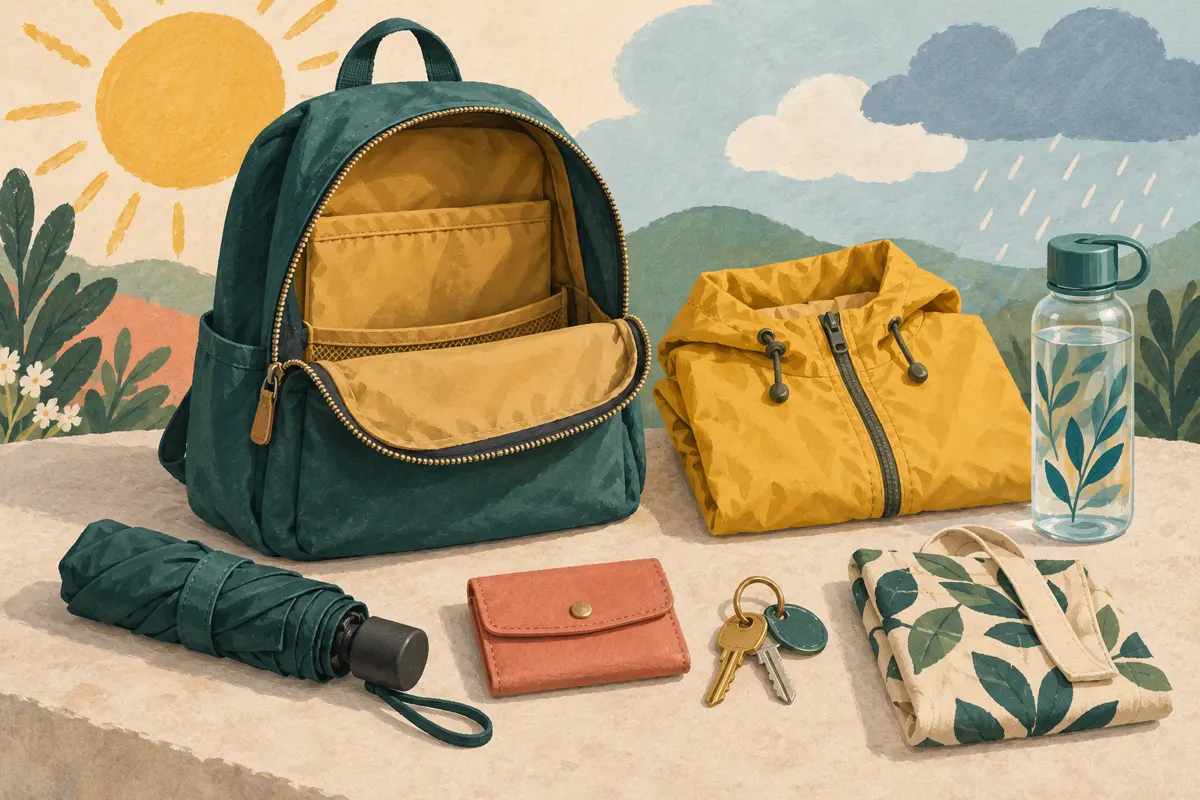
Pack your everyday essentials, one weather layer and a foldable shopping bag, then add only what the outing requires. For errands that combine walking, transit and several stops, the following proposed packing routine keeps useful items close without turning your bag into an all-day travel kit.
Choose a bag for the route you actually take
Start with how you travel and what you expect to bring home. A crossbody suits a light outing when you want your hands available. A compact backpack gives you space for a bottle and a layer while carrying the load across both shoulders. A tote can accommodate purchases, but its extra space is easy to fill beyond a comfortable load.
Look for a secure closure, comfortable adjustable straps and a small pocket for frequently used items. Water-resistant material is a useful feature for unpredictable weather. Organize small belongings in a pouch so keys and charging cables do not disappear among larger items.
Before adopting a bag for everyday use, pack your proposed essentials and wear it around the house. Check whether you can reach your wallet, close the bag easily and leave room for the layer you may remove outside. Use a bag you already own if it meets those needs.
Keep a small everyday core
This proposed core checklist is a starting point. Remove anything you do not use, and account for your personal needs before adding optional extras.
- Phone, keys and a compact wallet with the payment method, identification and transit pass you need.
- A refillable water bottle sized for the outing and available bag space.
- One folded reusable shopping bag for groceries or unexpected purchases.
- A small pouch with tissues and your usual personal care items.
- Any personal essentials you need while away from home.
- A snack if your route crosses a mealtime or leaves little opportunity to stop.
Treat a charging cable or power bank as a route-dependent addition. If you will use your phone for tickets, directions and several appointments, consider whether its starting charge will cover the outing. Avoid carrying duplicate accessories simply because they fit.
Add weather items for your time outside
Check the forecast for the hours you expect to be out, including your return journey. Then consider where you will wait: an exposed transit stop calls for a different packing choice from a short walk between indoor stops. The proposed approach is to choose items for those specific stretches outside.
- For possible rain, choose a packable rain jacket or compact umbrella according to how you prefer to walk and carry things.
- For a cooler return trip, add a thin sweater or another layer that fits over your starting outfit.
- For sunny stretches, bring sunglasses or a packable brimmed hat if you use them.
- For cold waiting periods, add gloves or a small warm accessory you expect to wear.
Keep a separate washable pouch or bag available for a damp umbrella or layer. Pack it where you can reach it without handling your wallet or electronics. When you get home, take wet items out before putting the bag away.
Pack around the order of your stops
Give each frequently used item a consistent place. Keep payment and transit items accessible, put the weather layer near the top, and reserve the main open space for purchases. Carry return labels, appointment papers or a parcel only on the day you need them.
- List your stops and identify anything each one requires.
- Pack those errand-specific items alongside your everyday core.
- Add the weather items relevant to your departure and return.
- Close the bag and check that you can retrieve essentials without unpacking it.
- Leave enough space to stow your outer layer, or plan to carry purchases in the folded shopping bag.
Reset the bag when you get home
Use this proposed reset routine after each outing: remove purchases, rubbish and completed errand paperwork; empty the bottle; and set damp items out to dry. Replace anything you used from the small pouch, then return keys and wallet to their usual places.
Before the next trip, refill the bottle and choose that day's weather additions. If the bag keeps feeling heavy, review its contents item by item. Keep what serves your routine and remove extras that have accumulated without a clear purpose. A ready bag should still have room to handle the errands ahead.