How to keep a crunchy salad from getting soggy before lunch
· Editorial team denvernewssteve.com
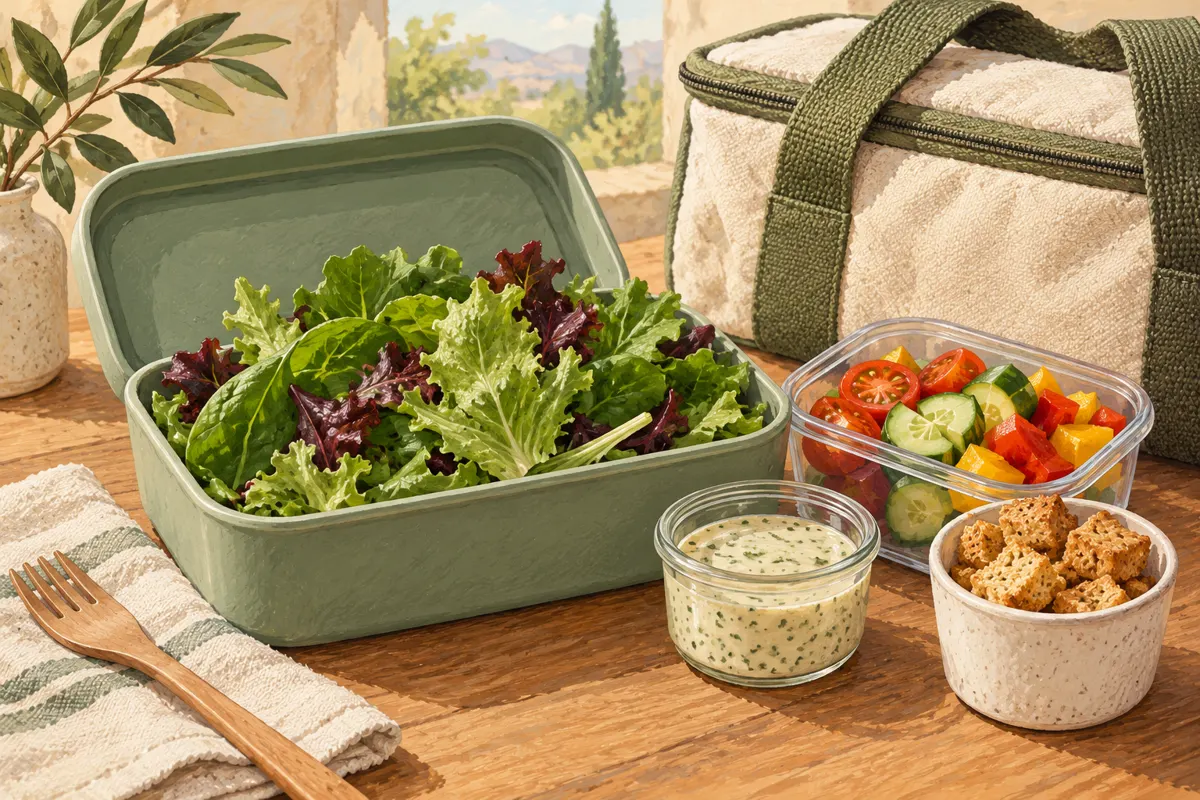
To keep a salad crunchy until lunch, pack thoroughly dried greens, keep dressing and juicy ingredients separate, and add croutons or other crisp toppings just before eating. Give the greens room in the container and keep the packed salad cold. These habits work whether you assemble lunch the night before or in the morning.
Start with dry, sturdy greens
Start with the leaves themselves: water left after washing travels into the lunch container with them. Dry the greens thoroughly before packing, including water caught in folds. A salad spinner is useful; without one, gently blot the leaves with a clean towel. Check that the container is dry, too.
For a salad you will pack the night before, choose a sturdy base such as romaine, cabbage, or kale. Delicate spring mix and butter lettuce need more careful handling. You can still use them, but keeping them away from wet toppings and avoiding compression becomes especially useful.
- Wash and dry the greens before assembling lunch.
- Refrigerate prepared greens until you are ready to pack them.
- Use a container roomy enough that closing the lid does not crush the leaves.
Keep dressing and juicy toppings apart
Put dressing in a small container with a secure, leak-proof lid. Keep it separate even if you are packing only a few hours ahead. Adding it at lunchtime gives you control over how much coats the leaves and prevents the salad from sitting in dressing all morning.
Treat juicy toppings the same way. Cut tomatoes, cucumber, citrus, and ingredients carried in brine can bring extra liquid into the greens. Put these in a separate compartment or small container, then combine them with the salad when you eat. Drain ingredients packed in liquid before adding them.
You do not need a separate cup for every topping. Group moist ingredients together and keep that group away from the leaves. A divided container can simplify packing, but an ordinary lunch container with a couple of small lidded pots works for the same purpose.
Layer carefully when using one container
If separate compartments are unavailable, put the heavier, wetter ingredients at the bottom and the greens on top. This arrangement keeps the leaves away from liquid that collects below. Continue to carry dressing separately; layering does not replace that step.
- Place beans, grains, or moist vegetables at the bottom of the container.
- Add firm vegetables such as carrots, radishes, or bell peppers.
- Set the dry greens loosely on top, leaving room beneath the lid.
- Carry dressing and crisp toppings in separate small containers.
Keep the container upright during travel so the layers stay in place. Leave enough space to toss the salad at lunch, or bring a bowl if your packing container is too full for mixing. A tightly packed container makes both protecting the leaves and distributing dressing harder.
Save crunchy toppings for lunchtime
Croutons and broken crackers lose their appeal when they sit against moist ingredients. Pack them separately and sprinkle them on after tossing the salad with dressing. Nuts and seeds can also travel in a separate dry container to preserve the texture you want.
Build crunch into the vegetables as well. Carrots, celery, radishes, and bell peppers give the salad texture beyond its final topping. That leaves you with a satisfying mix even when you want only a small handful of croutons or seeds.
Keep it cold and assemble just before eating
Chill the components before packing and refrigerate the packed lunch until departure. During travel, use an insulated lunch bag with an ice pack. Put the salad in a refrigerator when one is available, and keep the lunch bag away from direct sun and heat.
For easier preparation, keep washed, dried greens and prepared toppings separately in the refrigerator, then pack the portions you need. At lunchtime, add the moist toppings, pour in some dressing, and toss gently. Finish with the crunchy extras and eat after assembling.