How to reuse delivery boxes for organized home storage
· Editorial team denvernewssteve.com
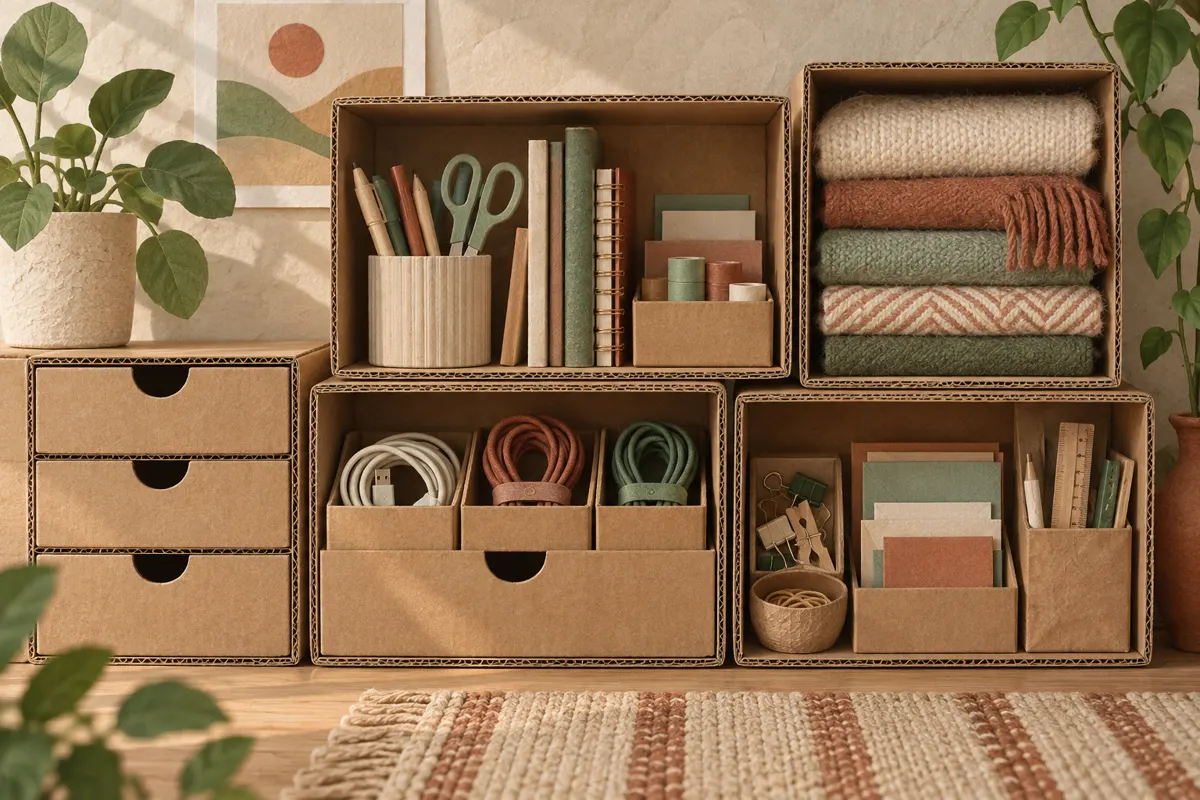
Reuse delivery boxes by choosing clean, dry, sturdy ones, fitting them to a drawer or shelf, and giving each container a specific job. Small boxes can separate loose items; larger ones can hold lightweight supplies. The proposed projects below keep the work simple: measure first, reinforce where needed, and label everything before putting it away.
Choose boxes worth keeping
Start with the storage space, rather than the pile of packaging. Identify one crowded drawer or shelf, then choose boxes that fit it. Keep boxes with firm walls, intact corners, and a base that sits flat. Reject any with damp patches, mold, greasy residue, strong odors, or signs of pests.
- Remove packing material and loose tape, and peel off or obscure shipping labels containing personal details.
- Check the bottom seam before filling the box; reinforce a loose seam with packing tape.
- Choose shallow boxes for drawers and boxes you can easily lift for shelves.
- Set aside only the sizes needed for your chosen space; flatten the extras instead of creating another storage problem.
Cardboard is best suited to dry indoor storage. Keep it away from places exposed to splashes or leaks, and avoid using it for wet shoes, open food, or leaking containers.
Turn small boxes into drawer compartments
Proposed project: arrange several small delivery boxes inside a drawer to separate stationery, charging accessories, or craft supplies. Try the layout before cutting anything. A useful arrangement leaves room to reach each item and allows the drawer to close freely.
- Empty the drawer and group its contents by use.
- Measure the available width, depth, and height, allowing clearance beneath the drawer opening.
- Place empty boxes in the drawer and assign each one a category.
- Mark walls that need shortening. Remove the boxes and cut them on a protective surface, keeping your hands clear of the blade.
- Tape loose edges, return the compartments to the drawer, and check that it closes before adding the contents.
For a proposed removable divider, cut two cardboard strips to fit inside a box. Cut a slot halfway through each strip, one from the top and one from the bottom, then slide them together into a cross. Adjust the fit before adding small items.
Make shelf containers easy to use
Proposed project: use medium delivery boxes as open containers for lightweight belongings such as scarves, wrapping supplies, or spare notebooks. Match the container to the category so you can see what belongs there without rummaging.
- Fold the top flaps inward if they fit neatly, or remove them for easier access.
- Keep the walls high enough to contain the items without blocking your view unnecessarily.
- Place frequently used containers near the front of the shelf.
- Support the base with both hands when lifting a filled box; avoid relying on cutout handles.
- Use a separate container for each clear category, such as gift bags or sewing supplies.
Avoid filling a large box simply because space remains. If the base bows or the sides bulge, reduce the load. Store heavy tools and large collections of books in containers designed to carry them.
Separate cords and other small accessories
Family Handyman suggests placing empty toilet paper tubes upright in a shoebox, with one small cord in each tube. A suitably sized delivery box can serve as the outer container for the same arrangement. This gives loose cords individual spaces instead of leaving them in a tangled pile.
As a proposed adaptation, label each tube with the device or cable type. Coil cords loosely enough to fit without forcing connectors down into the tube. Keep larger adapters in a neighboring compartment, and remove accessories you no longer use before building more storage.
Label the boxes and keep the system manageable
Use short, specific labels: “charging cables,” “gift ribbon,” or “winter gloves.” Put them on the side visible from your normal viewing position. A shelf box needs a front label; a drawer compartment may need one inside its back wall.
As a proposed routine, check the containers whenever you tidy that space. Remove stray items, replace boxes with softened walls or split seams, and revise labels when their contents change. If a category repeatedly overflows, sort its contents before adding another box. The goal is storage you can maintain with little effort.