How to set up a shared family calendar that children can use
· Editorial team denvernewssteve.com
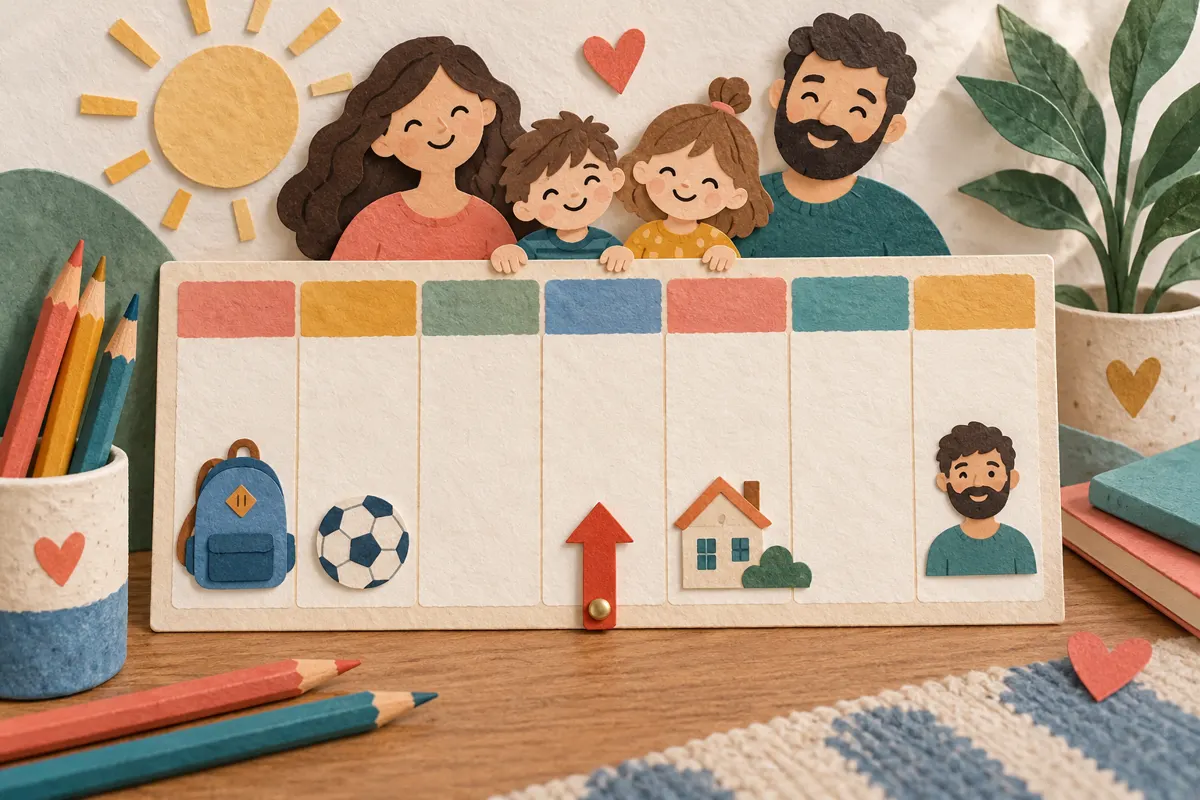
Use a paper calendar showing one week at a time, with recognizable pictures for activities and a name or picture for the adult handling each pickup. Put it where children can see and reach it, and move a “today” marker each morning. The setup below is an editorial proposal for making household plans understandable to children who are still learning to read.
Make a week children can follow
Start with a large sheet of paper, a pencil, markers, and removable notes or paper cards. Draw seven columns, label the days, and write the week’s dates across the top. Leave enough space for pictures and short notes without squeezing entries together.
For this proposed layout, divide each day into three rows: morning, pickup, and after school. On weekends, use the same spaces for morning, afternoon, and evening. If several children have different plans, give each child a separate strip within the rows that need it.
- Display the calendar at a comfortable viewing height for your child.
- Use a movable paper arrow to mark today.
- Keep adult work details elsewhere unless they change the child’s plans.
- Leave open spaces blank so the important entries remain easy to find.
Choose a small set of familiar symbols
Choose pictures together and ask your child what each one means. A backpack could mean school, a ball could mean soccer practice, and a house could mean going home. If a drawing is confusing, replace it with something your child recognizes more readily.
Add a short written label beside each picture for adults and beginning readers. Keep a small key along the bottom of the calendar, using the same pictures and words. Reuse symbols consistently: the ball should represent the same activity each week.
Color can provide another cue, but pair it with a name or symbol. For example, one child’s entries might have a green border and another’s a blue border, while both also show their names. Start with only the symbols needed for the coming week; add others when a new activity appears.
Give every pickup a clear plan
Treat pickup as its own entry, even when the arrangement usually stays the same. For each school day, show who will collect each child and where the child goes afterward. A small drawing or photo of a familiar adult can accompany their name.
A proposed Tuesday entry might read: “Grandma → soccer → home,” with a picture beside each part. Write the pickup time and meeting place in smaller text for adults. When siblings leave separately, put each arrangement on that child’s strip rather than sharing one ambiguous pickup card.
Adults should confirm arrangements with one another before putting them on the calendar. The paper display explains the plan to the child; it does not replace the school or program’s pickup procedures. If an arrangement is unresolved, mark it “to confirm” and have an adult settle it.
Walk through today with your child
American SPCC suggests involving younger children, including those who cannot yet read, by talking through upcoming events and what they need to prepare. Use your paper calendar as the focus for that conversation.
- Move the today marker together and name the day.
- Point to the pictures in order: school, pickup, then the next activity.
- Ask one concrete question, such as “Who is picking you up today?”
- Connect the plan to preparation: “There is swimming after school, so let’s pack your swim bag.”
If your child cannot explain an entry, simplify it together. Let them point, place an activity card, or move the marker. Adults remain responsible for confirming plans and keeping the calendar accurate.
Use a five-minute weekly update
American SPCC recommends a regular weekly catch-up to review family scheduling. For this proposed paper system, reserve five minutes at a predictable time to prepare the next week.
- Check school notices and adult calendars for plans affecting the children.
- Add school days, activities, and any unusual events.
- Confirm each pickup adult, destination, and necessary adult details.
- Invite children to place familiar symbols and identify anything confusing.
- Check for overlapping commitments and put the finished week on display.
When plans change midweek, replace the old entry promptly and tell the child directly. Point to the updated picture and explain the new sequence. Remove canceled cards instead of leaving competing versions visible. Keep spare cards beside the calendar so updating it takes only a moment.